

Systems, Networks & Linux Hardening
Understand how operating systems and networks actually behave, then reduce their attack surface through configuration, permissions and monitoring.
Linux • Bash • TCP/IP • Wireshark
Cybersecurity
Learn offensive and defensive security hands-on — hardening Linux systems, analysing live traffic, exploiting and then patching vulnerable infrastructure.
Security cannot be learned from theory alone. The Cybersecurity track at Holberton School Azerbaijan puts learners inside realistic environments where systems are attacked, broken and then rebuilt more resiliently.
From day one you work with the tooling used in professional security operations — packet analysers, vulnerability scanners, hardened Linux images and incident response playbooks — building the judgement that certifications alone do not provide.
Security is a practice, not a subject. You attack, defend, document and improve production-like environments across three foundational stages.
Understand how operating systems and networks actually behave, then reduce their attack surface through configuration, permissions and monitoring.
Linux • Bash • TCP/IP • Wireshark
Map attack surfaces, exploit misconfigurations and insecure code in controlled labs, then write the remediation that closes them.
Nmap • Burp Suite • OWASP Top 10 • Python

Build monitoring pipelines, investigate incidents end to end and produce the reports a security team actually acts on.
SIEM • Log Analysis • Incident Response • Cryptography
Structured modules designed to build depth and technical confidence sequentially.
Processes, memory, file systems, permissions and the shell environment that every security task depends on.
How packets move, where trust is assumed and how traffic is captured, filtered and interpreted.
Common vulnerability classes, how they are discovered, exploited and then fixed in source code.
Applied cryptography, key management and the configuration work that makes infrastructure defensible.
A full assessment of a realistic environment, documented and defended the way a professional engagement would be.
Graduates build competencies that map directly to high-demand security roles across the regional and international ecosystem.
Operations
Monitoring systems, triaging alerts and investigating incidents as they unfold.
Offensive
Assessing applications and infrastructure, then reporting exploitable findings with remediation.
Infrastructure
Hardening systems, automating controls and building defensible network architecture.
Cloud
Securing cloud accounts, identity boundaries, secrets and deployment pipelines.
Response
Containing and analysing active incidents, then turning findings into prevention.
Governance
Translating technical risk into policy, audit evidence and organisational decisions.
Ready to develop your skills through projects, collaboration and real technical challenges? Applications for the upcoming cohort are currently open.
Motivated builders who want to work in security operations, offensive testing or infrastructure defence — including university students, career changers and IT professionals moving into security.
No prior background is required. The curriculum begins with computing and Linux foundations before moving into networking, exploitation and defence.
You will work with industry-standard tooling including Linux, Bash, Python, Wireshark, Nmap, Burp Suite and SIEM platforms, alongside applied cryptography.
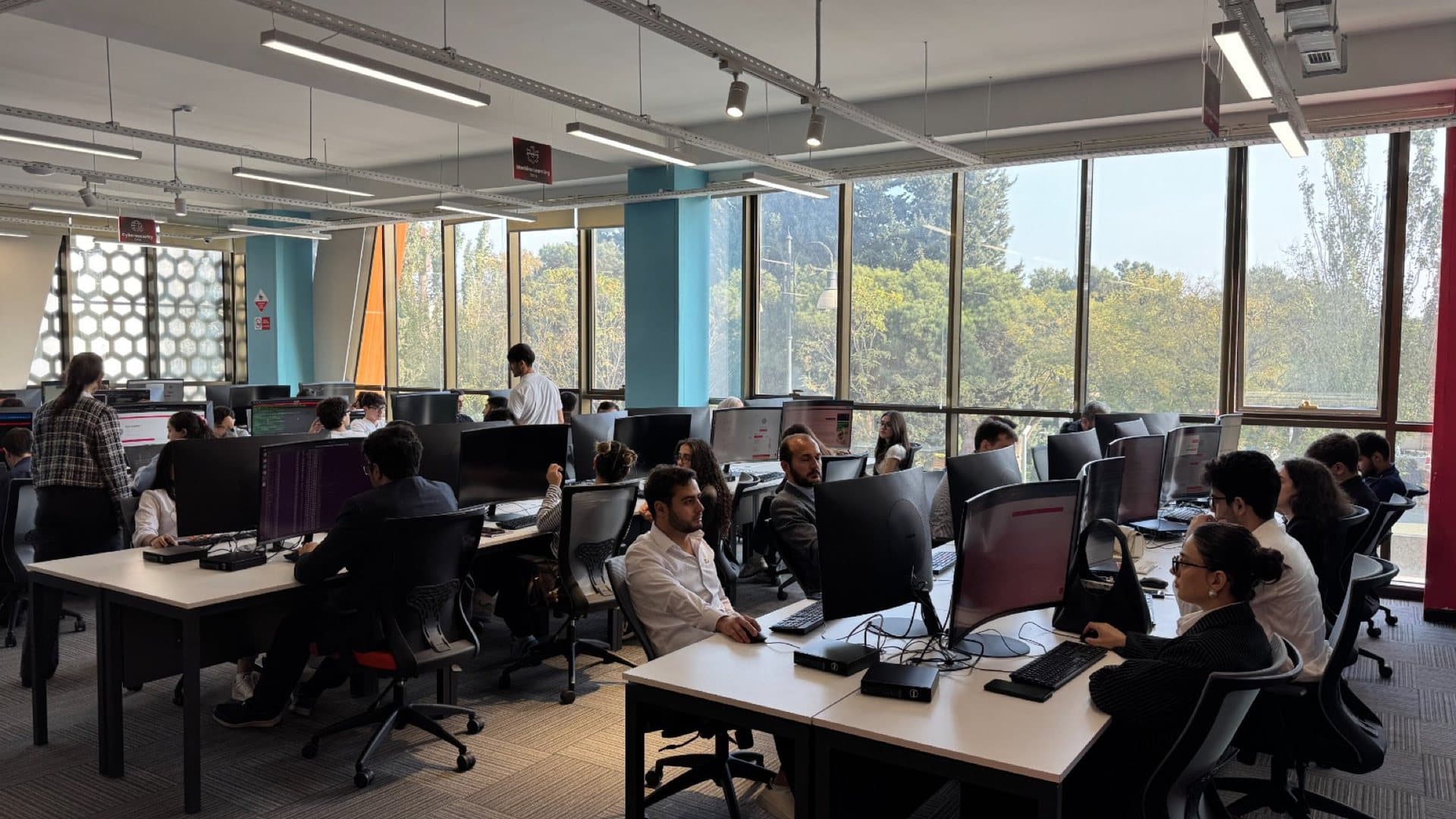
The program takes place at the official Holberton School Baku campus, equipped with isolated lab environments for offensive and defensive exercises.
Complete the registration form, then the online logic and reasoning assessment. Successful candidates receive invitations for campus orientation and cohort onboarding.