
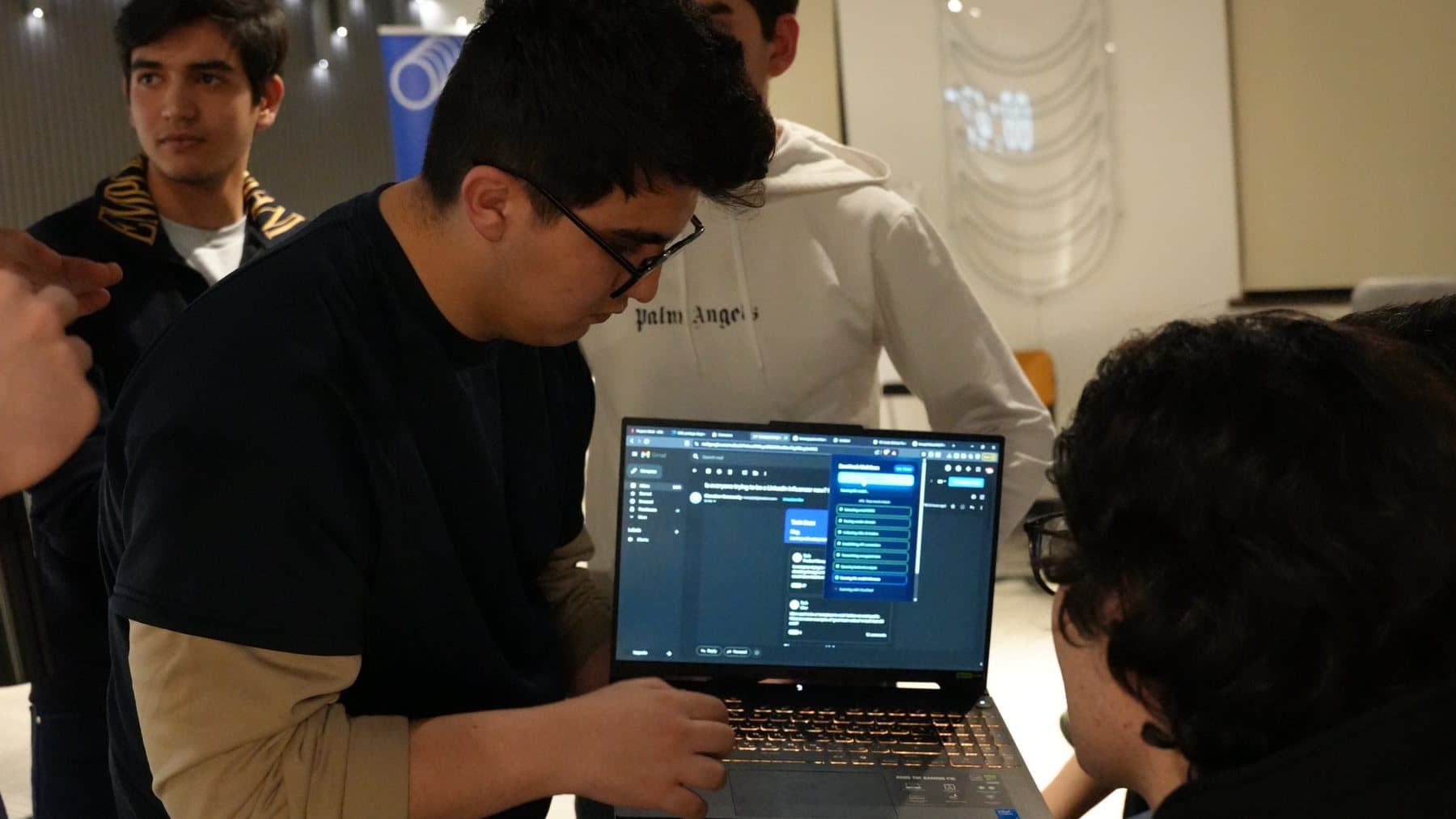
Data Foundations & Feature Engineering
Collect, clean and reshape real datasets, then build the features that determine whether a model can learn at all.
Python • NumPy • pandas • SQL
Machine Learning
Master the mathematics, tooling and engineering practice behind modern machine learning — from data pipelines and model training to evaluation and deployment.
Machine learning is an engineering discipline before it is a research one. The Machine Learning track at Holberton School Azerbaijan trains builders to work with messy real data, select appropriate models and defend their evaluation choices.
Rather than running notebooks in isolation, learners construct complete pipelines — ingestion, feature engineering, training, evaluation and deployment — using the Python ecosystem that production teams actually rely on.
Models are only useful when they ship. You build, measure, break and redeploy learning systems across three foundational stages.
Collect, clean and reshape real datasets, then build the features that determine whether a model can learn at all.
Python • NumPy • pandas • SQL
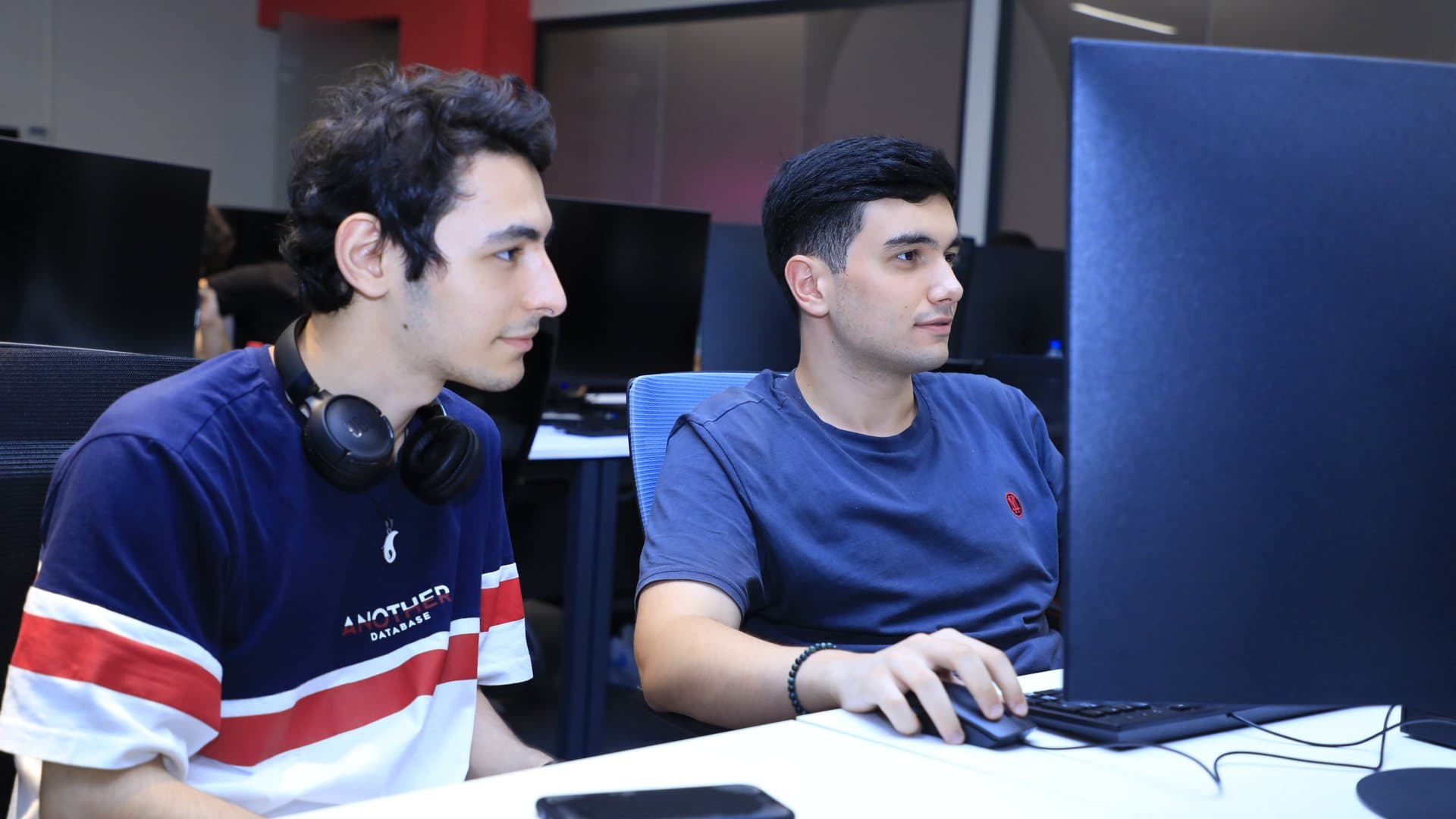
Implement classical and deep learning models, tune them honestly and measure performance with metrics that match the problem.
scikit-learn • PyTorch • Model Evaluation
Package models as services, monitor them in production and handle the drift and failure modes that follow.
FastAPI • Docker • MLOps • Monitoring
Structured modules designed to build depth and technical confidence sequentially.
Python engineering practice alongside the linear algebra, probability and statistics that machine learning rests on.
Working with real, imperfect data — collection, cleaning, exploration and the feature work that follows.
Supervised and unsupervised methods, model selection, and the evaluation discipline that prevents self-deception.
Neural network architectures, training dynamics and the practical techniques that make them converge.
Shipping an end-to-end machine learning application and defending every modelling decision behind it.
Graduates build competencies that map directly to high-demand data and machine learning roles across the regional and international ecosystem.
Modelling
Designing, training and shipping models that serve real product requirements.
Analysis
Framing problems, exploring data and turning analysis into decisions teams can act on.
Pipelines
Building the ingestion, storage and transformation layers that models depend on.
Operations
Automating training, deployment and monitoring across the model lifecycle.
Vision
Applying deep learning to images and video for detection, recognition and inspection.
Analytics
Modelling data for reporting, experimentation and business measurement.
Ready to develop your skills through projects, collaboration and real technical challenges? Applications for the upcoming cohort are currently open.
Builders who want to work with data and models in production — including university students, developers moving into ML and analysts deepening their engineering skills.
No advanced background is required. The curriculum builds the necessary linear algebra, probability and statistics alongside the programming work.
You will work with Python, NumPy, pandas, scikit-learn, PyTorch, SQL, FastAPI and Docker, plus the evaluation and monitoring practices used in production teams.
The program takes place at the official Holberton School Baku campus, with access to GPU-equipped workstations for model training.
Complete the registration form, then the online logic and reasoning assessment. Successful candidates receive invitations for campus orientation and cohort onboarding.